
the chihuahua breed is known to have the knee condition known as patellar luxation and is one of the most common health problems associated with chihuahuas. the knee is a complex structure consisting of muscles, ligaments, tendons, cartilage, and bones. these components must align properly and interact harmoniously in order to function properly. three bones are included in the knee: the femur, the tibia, and the patella (kneecap).
the lower front portion of the femur (thigh bone) in a normal chihuahua has two bony ridges that form a fairly deep groove in which the patella is supposed to slide up and down. these structures limit the patella’s movement to one restricted place, and in doing so, control the activity of the quadriceps muscle. the entire system is constantly lubricated by joint fluid. it works so that there is total freedom of motion between the structures.
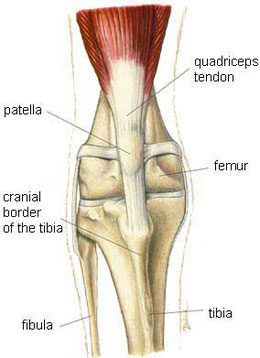
diagram of the anatomy of a normal knee cap
patellar luxation (or trick knee, subluxation of patella, or floating patella), occurs when the patella, or kneecap, dislocates or moves out of its normal location.
when the patella is luxated in a chihuahua, the ridges forming the patellar groove are not prominent, and a too-shallow groove is created. in a chihuahua with shallow grooves, the patella will luxate (jump out of the groove) sideways, especially toward the inside. this can causes the leg to ‘lock up’ with the foot held off the ground.
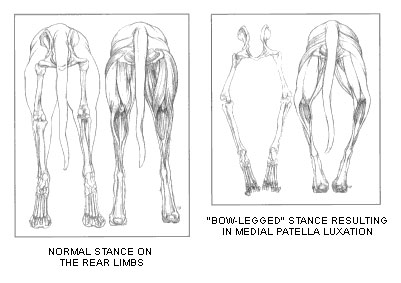
chihuahua with a luxating patella on both hind legs
(like teaka the famous chihuahua has as seen in the video above)
when the patella luxates from the groove of the femur, it usually cannot return to its normal position until the quadriceps muscle relaxes and increases in length. this is why a chihuahua may be forced to hold their leg up for a few minutes after this occurs because the muscles are contracted, the patella is luxated from its correct position and the joint is held in a flexed or bent position. pain is caused by the knee cap sliding across the bony ridges of the femur.
patellar luxation in chihuahuas can have both genetic causes, or environmental causes (luxation due to injury). if it appears at an early age, it’s likely to be due to genetic causes. environmental sources of injury can include too much jumping (i.e. jumping off furniture), or too much stress on the patella and surrounding ligaments (ie. when a chihuahua dances on its rear legs). this is especially dangerous when a chihuahua is a puppy in stages of early development.
adult chihuahuas can also damage their kneecap by a forceful hit or blow. with age, looseness might also be recognized, especially in chihuahuas that are overweight as there is constant pressure on surrounding ligaments.
symptoms of patellar luxation includes skipping, yelping when in pain, holding the rear leg up for a short time as they walk or run or rear-leg weakness. if left uncorrected, the condition will result in serious wear of the patellar ridges where the groove becomes very shallow resulting in both arthritis and in the more serious cases, permanent crippling.
if your chihuahua does have patellar luxation, see your veterinarian for options to help alleviate symptoms. the use of supplements such as glucosamine may be helpful and it’s recommended that you keep your chihuahua lean and exercised to keep the leg muscles strong. some people have also anecdotally reported that CBD products have helped their dog with pain and anxiety.
depending on how severe the condition is, it may or may not require surgery. if required, your chihuahua will recover quickly with complete recovery in as early as thirty days. breeding chihuahuas with this disorder is not recommended. chihuahuas affected still make for wonderful pets and those that do require surgery usually lead perfectly normal lives without any restrictions on activity.
“get this information and more in an ebook delivered right to your inbox!”
the amazing ebook, caring for chihuahuas made easy, breed information, health care and nutrition teaches you about common chihuahua health problems and how to properly care for such a small dog! it also teaches you how to extend the life span of your chihuahua!
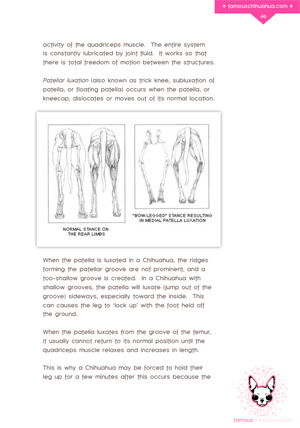
below is a sample page from the section on knee problems!
related: what is a teacup chihuahua?
what’s the difference between a deerhead and an apple head chihuahua?

references: peteducation.com/article.cfm?c=2+2084&aid=457 – drs. foster & smith, inc.
picassochis.com/healthf.htm
images: petsurgery.com/medialpatellarluxation.html
veterinaryreferralsurgery.com/article_patellar.php








Comments 32
Could someone please put on the form for the vet to fill in
,my chi has had both knees done on 6 th march . It’s been 24 days now , I still restrict him from jumping and running , although he really looks fine now , I have kept him in a cage since surgery only letting him out for a wee on a lead , and for cuddles on the settee with me . He settled well in the cage and doesn’t mind it , but now he is feeling better he wants to play , only a couple more weeks and he will be free ! Bless him
Thanks for the video, good to know what this looks like! Rarely, on walks, Matilda will randomly start limping for a few steps, then appear to get better, no whining or yelping. I was wondering if she was starting to develop luxating patella in one of her legs, we’ll continue our regular walks and hope it doesn’t worsen.
Is this what my dog has? When me or my family touch her legs, she yelps like it hurts.
One of my chi’s has this problem in both rear legs-doesnt seem to slow him down-hes slim & very active-but it really does look weird when he stands up on his back legs…very bowed
my friend has a female 4 year old chi, that is way over weight 12 -14 pounds,she has luxating patella in one rear leg,vet says she needs surgery,okay but if she lost weight and took glucosaime would that help the problem with out surgery? also they say she has a liver problem so they feed her cooked chicken,could liver problem be caused by being over weight?
Does anyone have any suggestions or advice as to the care required after the knee surgery?
Thank you!