Your chihuahua just growled at your child. Or snapped. Or bared those tiny teeth at the small human reaching for her with love in their eyes and sticky hands. And now you are standing in your kitchen with one question on your mind: is my chihuahua good with kids — or did I bring home the wrong dog?
Here is the short answer, up front: yes, chihuahuas can be wonderful with kids. The longer answer is the one that matters: it depends on the child, it depends on the dog, and it depends on the rules in your house. A chihuahua is not a starter pet for a toddler. But with an older child who knows how to be gentle — and a grown-up who supervises — a chihuahua and a kid can be the best of friends.
Why it goes wrong (and it is not meanness)
Start with size. Most chihuahuas weigh six pounds or less and stand five to eight inches tall at the shoulder. Your toddler weighs five times that and is still learning to walk without falling over. To your chihuahua, a small child is not a playmate. They are a giant who moves fast, makes sudden noises, and reaches from above — and your chihuahua has no way to know the giant means well.
Chihuahuas are also wired to startle. They are alert little watchdogs with excellent hearing and a hair-trigger on surprise. A child who runs up from behind, grabs from above, or squeals right next to their ear is not being naughty. But to a three-pound dog with nowhere to go, that is a fright — and a frightened dog does the only thing they can do. They growl. They snap. They say “back off” in the only language they have.
And then there is the picking up. Children love to carry things. Chihuahuas hate being carried by small hands — they are fragile, they are wriggly, and a fall from a child’s arms can break a leg or worse. A dog who is grabbed, squeezed, or carried like a toy learns fast that small hands mean trouble.
What “good with kids” actually looks like
It looks quiet. The best chihuahua-kid friendships are boring to watch: a child sitting on the floor, letting the dog come to her. A chihuahua curled up next to a kid who is reading, not chasing them. A dog who walks toward the child instead of away from them — because they know the child will not grab.
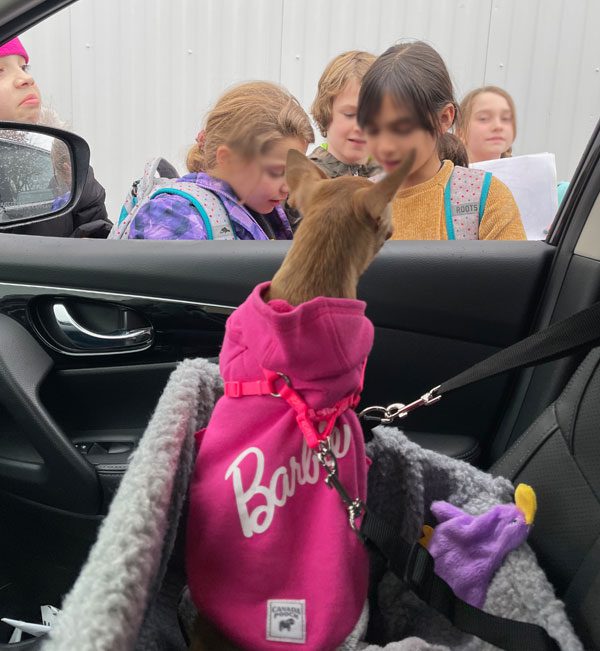
Chihuahuas pick their person, and sometimes that person is the kid in the house. When a chihuahua chooses a child, the bond is fierce — they will follow that child from room to room, sleep at the foot of their bed, and keep watch like it is their job. Because to them, it is.
Age matters more than anything. Most chihuahuas do best with older children — the ones who can follow a rule, keep their voice down, and understand that a tiny dog is not a stuffed animal. A calm ten-year-old and a chihuahua can be inseparable. A grabby toddler and a chihuahua is a combination that needs a grown-up in the room, every single minute.
The rules for kids
Teach your kids how to show love for your dog – make rules of the house — because they are:
- Let the dog come to you. Sit on the floor and wait. A chihuahua who walks over to you is a chihuahua who wants to be there.
- No picking them up — or if you do, sit down first. Dogs get carried from the floor, not from the air.
- No hugging around the neck, no grabbing the ears, no pulling the tail. Gentle strokes on the back or chest, and that is plenty.
- No chasing, ever. A chihuahua who runs away is saying no. Let them go.
- Quiet voices and slow hands. Fast and loud is scary when you are six inches tall.
- Leave them alone when they are eating, sleeping, or in their safe spot. Even best friends need a door to close.
- Listen when they talks. A stiff body, a turned head, lip licking, a yawn that is not sleepy — those are all “please stop.” A growl is not rudeness. It is a warning, and a dog who growls is a dog who has not bitten yet.
The rules for grown-ups
The kids are only half the job. The rest is yours:
- Always. Never leave a small child alone with any dog, no matter how sweet the dog is or how gentle the child is. Not for a minute, not “just while I grab the laundry.” The grown-up is the safety net.
- Do not punish the growl. If you scold a dog for growling, they do not stop being scared — they stop warning you. And a dog who has lost their warning is a dog who goes straight to the bite.
- Give them an escape. Every chihuahua needs a place they can go where small hands cannot follow — a bed in a quiet corner, a crate with the door open, a lap that is theirs alone. A dog with an exit rarely needs to snap.
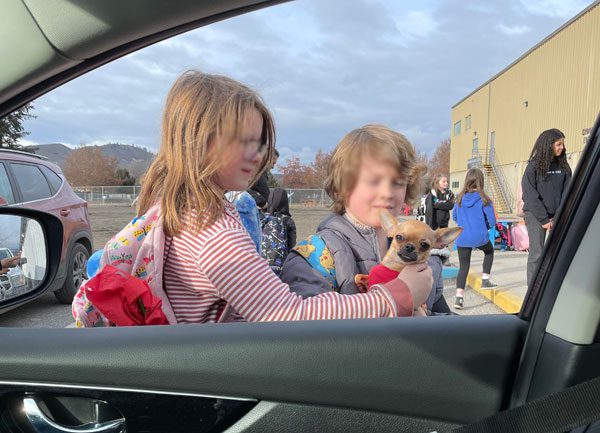
- Socialize early and gently. A chihuahua who meets calm, kind children early learns that small humans are safe. A chihuahua who only meets children at full volume learns the opposite.
- Teach the kids, not just the dog. Most chihuahua-kid problems are people problems. The child who knows the rules is the child the chihuahua trusts.
When to check with a vet or trainer
Most snapping is a frightened little dog asking for space. But some of it needs a professional:
- The snapping started suddenly, out of nowhere — pain can make any dog grumpy. Teeth, knees, ears, and tummy trouble are all worth a vet visit.
- A bite broke the skin, or the snapping is getting more frequent instead of less.
- They guard their food, their toys, or their person from the children, and it is escalating.
- They are frightened all the time — shaking, hiding, refusing to come out — and it is not getting better.
- You are not sure what you are seeing, or the house feels tense every time the dog and the kids are in the same room. A trainer who works with small dogs can read the room in one visit.
The short version
So — are chihuahuas good with kids? The honest answer is yes, with the right kid and the right rules. Not a toddler’s toy, not a babysitter, not a stuffed animal that happens to breathe. A small, loyal, funny little dog who does best with people — big and small — who treat them gently and listen when they talks. Get that part right, and your chihuahua will not just tolerate your kids. They will pick one, follow them everywhere, and guard their bedroom door like it matters. Because to your chihuahua, it does.
General information only, not veterinary or behavioral advice. If your chihuahua’s behavior suddenly changes or comes with other symptoms, check with your vet.