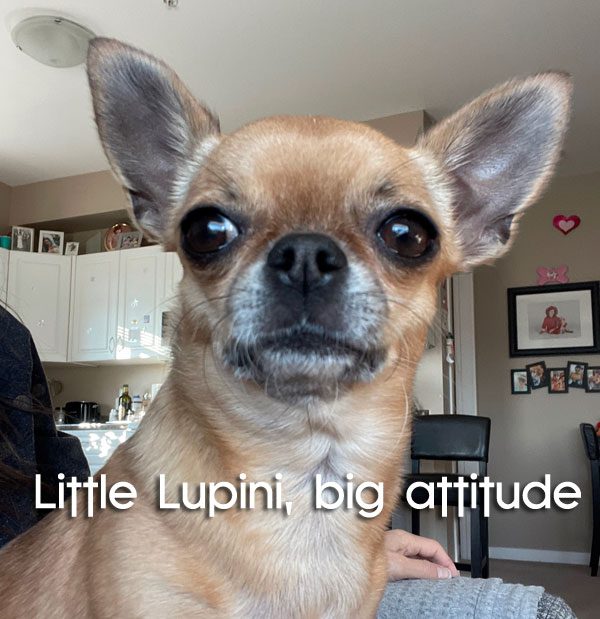
Ask anyone what chihuahuas are like and you’ll hear the same word: mean. The tiny terror. The ankle-biter. The little dog with the big attitude who growls at guests, snaps at the vet and rules the house with an iron paw.
Here’s the truth nobody tells you: your chihuahua isn’t mean. They’re a few pounds of dog in a world built for giants, and small dogs have to shout to be heard. Growling and snapping aren’t bad attitude. They’re language — and once you learn to read it, the “mean” chihuahua turns out to be the most honest dog in the room.

The Fear Growl
This is the most common growl of all, and the most misunderstood. A chihuahua lives at ankle height. Everything is bigger than them: the postman, the toddler, the Great Dane at the park, the vet with the thermometer. When a chihuahua growls at a stranger, they’re not being rude. They’re saying, “I’m scared, please stay back.”
Fear is the engine behind most chihuahua snapping. A frightened dog has three options — run, freeze, or fight — and a chihuahua on a lead, on a lap, or cornered on the sofa has nowhere to run. So they growl. It’s the bravest thing a tiny dog can do: stand their ground and ask the scary thing to go away.
The “Too Close” Snap
Watch what happens right before most snaps. Someone reaches over the dog’s head. A stranger grabs for a pat. A child swoops in for a hug. Hands come down from above, fast and uninvited, and the chihuahua — who never saw it coming — snaps at the hand.
The snap is the full stop at the end of a sentence nobody read. Before it there were warnings: a stiff body, a hard stare, a lip lick, a turn of the head. The chihuahua asked nicely, three times, in dog language. The snap only happens when nobody listened.
The Resource-Guarding Growl
Dinner bowl. Favorite toy. A warm lap. Their person. When a chihuahua growls over something they value, they’re not being possessive — they’re guarding a resource, which is completely normal dog behavior. Every dog does it. Chihuahuas just do it at very close range, which makes it feel personal.
It helps to remember what guarding costs them. A chihuahua guarding a lap is a dog who has decided that lap is the safest place in the world — and they’re terrified of losing it. The growl isn’t “I hate you.” It’s “this matters to me.”
The “That Hurts” Snap
A sweet dog that suddenly starts snapping when touched in one spot is very often a dog in pain. Chihuahuas are prone to sore teeth, aching joints, luxating patellas (a kneecap that slips out of place) and ear infections — and they can’t tell you where it hurts. So they tell you the only way they can: don’t touch me there.
If your chihuahua’s temper changes overnight, think pain before you think attitude. A dog who growls when picked up, who flinches at a touch that never bothered them before, or who snaps when you brush a particular spot is giving you a medical clue, not a behaviour problem.
The Over handled Grump
Chihuahuas get handled more than almost any other breed. They’re carried everywhere, dressed up, passed from person to person, woken up for cuddles and posed for photos. All of it is done with love — and almost none of it is the dog’s choice.
Imagine being picked up twenty times a day without ever being asked. The grump is the protest. A chihuahua that growls when scooped up mid-nap isn’t ungrateful; they’re a small creature asking for the same thing you’d ask for: a little warning, and a little say in what happens to their own body.
The Habit Snarl
Then there’s the snarl that works. The chihuahua snaps, the visitor backs off, the nail clippers go away, the bath gets cancelled. Snapping worked — so the chihuahua does it again. And again. Within weeks you have a dog who snarls at everything, and owners who tiptoe around their own pet.
Nobody meant to teach this. But every time the scary thing went away right after the snap, the snap got stronger. The good news is that habits can be unlearned the same way they were learned — slowly, kindly, and with better options than the snarl.

When the Grump Changes: Check With a Vet or Trainer
Most chihuahua grumpiness is normal communication. But a change in the pattern is worth a professional opinion.
- A sudden change — a calm dog that starts growling, snapping or biting out of nowhere.
- Signs of pain — flinching, yelping, limping, eating less, or not wanting to be touched in one spot.
- Escalation — growls turning into snaps, snaps turning into bites, or any bite that breaks the skin.
- Guarding that spreads — from food, to toys, to laps, to doorways, to people.
- Aggression towards children — any growl, snap or bite aimed at a child needs a professional, promptly.
- Senior changes — an older dog getting grumpier, confused, restless at night, or snapping when startled awake.
What to Do in the Moment
Stop. Freeze. Give them space. A growl is information, not defiance — and the fastest way to end it is to back off and let the dog breathe.
Never punish the growl. Scolding, shouting at or hitting a growling dog doesn’t remove the fear — it removes the warning. A dog that has learned growling gets them punished may skip the growl next time and go straight to the bite. The growl is the gift; don’t train it away.
Don’t scoop them up mid-snap. Hands reaching in while a dog is mid-warning usually make things worse. Let them settle, then redirect with something calm — a treat tossed a little way off, a quiet word, a bit of distance.
Learn the warnings that come before the snap: a stiff body, hard eyes, lip-licking, yawning, turning away. The snap is the last resort, not the first. If you step in at the stiffening, you may never see the snap at all.
Manage the situation instead of fighting it. A safe spot to retreat to, a baby gate at the door, asking visitors to ignore the dog and let them approach in their own time — these cost nothing and prevent most incidents.
Reward the calm. A quiet word and a treat when your chihuahua lets a stranger exist peacefully teaches them that strangers are boring, not scary. That’s the lesson that actually sticks.
And rule out pain first. A vet check is always step one with a sudden change — and after that, a qualified force-free trainer, not a “dominance” fix. Chihuahuas don’t need to be dominated. They need to feel safe.
The Grump Is Part of the Charm
Here’s the secret the “mean chihuahua” jokes miss: the same fire that makes them growl is what makes them loyal, brave and hilarious. A chihuahua that sets boundaries is a chihuahua that trusts you enough to say no — and a dog that feels safe enough to say no is a dog that feels safe.
So the next time your chihuahua gives you the grump, don’t take it personally. Say thank you for the warning, give them a little room, and remember what you’re looking at: a few pounds of pure courage, doing their very best to be heard in a world that keeps forgetting how small they are.

This is general information only, not veterinary or behavioral advice. If your chihuahua's behavior changes suddenly, or if anyone is bitten, talk to your veterinarian or a qualified force-free trainer.