It usually happens like this. Your chihuahua is trembling on the couch, or shivering in your arms, and before you know it you are awake at 2 a.m. typing “why does my chihuahua shake” into your phone, convinced something must be wrong.
Here is the reassurance up front: most of the time, nothing is wrong. A shaking chihuahua is usually not a broken dog. It is a tiny dog with a fast metabolism and enormous feelings, talking with its whole body. Once you learn the dialects, the shaking stops being scary — and starts being readable.
Think of it this way: a chihuahua is the smallest dog in the world, feeling everything at full volume, in a body too small to contain it all. The shake is what leaks out.
The Cold Shake
This is the simplest one. Chihuahuas have very little body mass and lose heat fast, so they genuinely get cold more easily than bigger dogs. If the shaking starts on a chilly morning, on a cold floor, or after a bath, your dog is probably just cold. A blanket, a sweater, or a warm lap usually ends it. This is also why chihuahuas are famous burrowers — under blankets is where the warmth is.
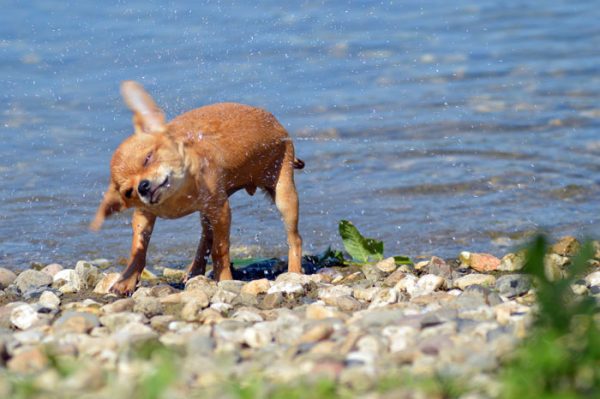
The Excitement Shake
Treats. Hellos. Walkies. The leash coming off its hook. Chihuahuas tremble when they are thrilled, the same way a person might bounce on their toes. Adrenaline floods a tiny body and there is nowhere for it to go except out through the shivers. If the tail is wagging, the ears are up, and the whole dog is leaning toward the good thing, that shake is joy, not distress.
The Fear Shake
The world is a big and startling place when you weigh three pounds. Strangers, loud noises, the vet’s waiting room, a thunderstorm, a vacuum cleaner — all of these can set a chihuahua trembling. Fear shakes usually come with other clues: ears back, tail tucked, body low, trying to get behind you or be picked up. Your dog is not being dramatic. It is asking for safety, in the only language it has.
The Overwhelmed Shake
Too many people, too much noise, too much handling, too long a day — chihuahuas can get overstimulated, and shaking is one of the first signs they have hit their limit. This is the shake that says “enough.” A quiet room, a familiar person, and a break from the excitement will usually settle it faster than any amount of fussing.
The “Pick Me Up” Shake
And then there is the shake with an agenda. Chihuahuas are smart, and they learn quickly that trembling gets them lifted into warm arms, wrapped in a blanket, or handed a treat. That is not manipulation — it is communication. Your dog has figured out how to ask for what it wants. If the shake stops the second they are in your arms, you have your answer.
A Special Note About Puppies
Tiny chihuahua puppies have one extra reason to shake that adult dogs mostly do not: low blood sugar. Puppies, especially very small ones, can run low on glucose if they go too long between meals, and trembling, weakness, or wobbliness can be signs of it. Regular small meals matter enormously for puppies, and a trembling puppy that also seems weak or disoriented should see a vet promptly.
When the Language Changes: Call the Vet
Most shaking is conversation. But sometimes the language changes, and that is when you stop translating and start dialing. Call your veterinarian if you notice any of these:
- Shaking that starts suddenly, for no clear reason, and does not stop
- Trembling that comes with lethargy, loss of appetite, vomiting, or diarrhea
- Shaking along with limping, yelping, hiding, or any sign of pain
- Weakness, wobbliness, disorientation, or collapse
- A seizure, or any shaking you cannot interrupt or wake the dog from
- Possible exposure to something toxic, such as medication, chemicals, or a poisonous plant
Vets have names for some of the rarer causes, including generalized tremor syndrome, a neurological condition that causes full-body tremors in small breeds. It is diagnosed and treated by a vet, not by a blanket — which is exactly why the checklist above matters.
What to Do in the Moment
For the everyday shakes, the response is refreshingly simple. Keep your dog warm with a blanket or sweater. Keep the environment calm and familiar. Remove whatever is overwhelming them, if you can. Keep routines steady, since predictability is a nervous dog’s best friend. Comfort your dog calmly — you do not need to ignore the fear to avoid “rewarding” it; a steady, boring presence is what a frightened little dog needs most.
What not to do matters too. Do not punish shaking, scold it, or laugh it off when your dog is clearly frightened. And do not wrap every single tremble in a panic of your own — dogs read our tension, and a worried owner can turn a small shake into a bigger one.
The Shake Is Part of the Charm
Here is the truth that every chihuahua person eventually learns: the shaking is not a flaw in the breed. It is a feature of a dog that feels everything, honestly and out loud, with no filter at all. The smallest dog in the world, trembling with cold, with joy, with fear, with love — that is not a dog that is broken. That is a dog that is talking.
So the next time your chihuahua shakes, take a breath before you reach for your phone. Ask what the shake is saying. Most of the time, the answer will be something simple: “I’m cold.” “I’m so excited.” “I’m a bit scared.” Or, most often of all: “Pick me up.” And honestly? They are not wrong.
Written By Nadia Alterio, Smart Woman Coaching and FamousChihuahua.com - founder of International Chihuahua Appreciation Day (May 14). This article is general information, not veterinary advice; if you are worried about your dog, your vet is always the right call.
General information only, not veterinary advice. If you are worried about your dog’s shaking, or if anything on the checklist above applies, please see your veterinarian.